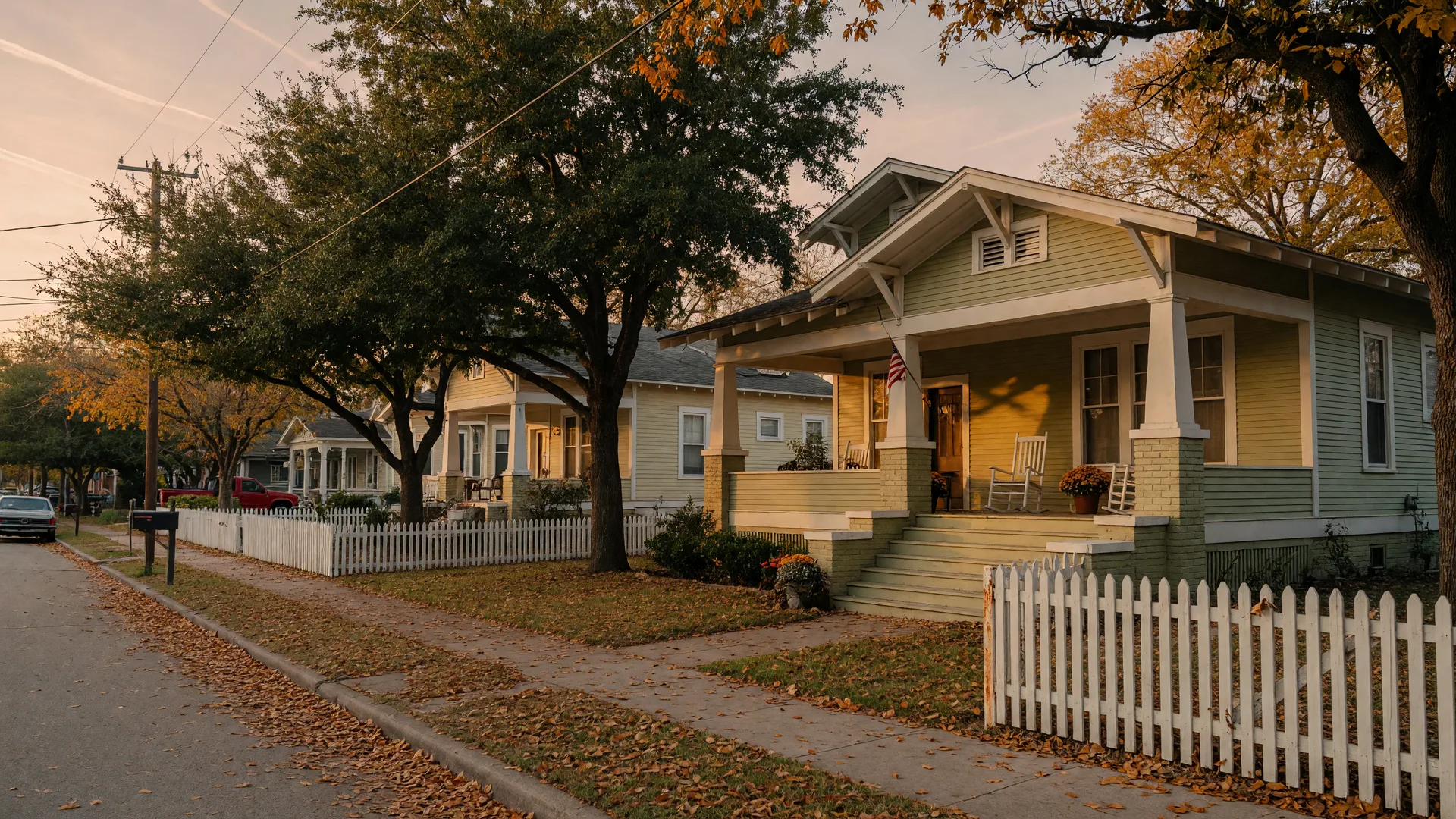

Historic properties in Houston Heights are governed by the City of Houston's Historic Preservation Ordinance, Chapter 33. If you own a contributing home in the Houston Heights Historic District East, West, or South, or in nearby Woodland Heights or Norhill, you need a Certificate of Appropriateness, or COA, before most exterior changes: siding, windows, porches, roofs, additions, or demolition. Here is what the rules require, what stays exempt, and how preservation can pay.
Which Homes Are in a Historic District?
The map matters. City Council designated the original Heights subdivision as a local historic district in 1991; today three districts share one set of design guidelines: West (December 19, 2007), East (February 21, 2008), and South (June 29, 2011). Woodland Heights (2011, roughly 386 contributing homes) and Norhill (June 14, 2000) operate under the same ordinance, and the Heights' National Register listing since 1983 carries federal recognition but no COA requirement. Areas such as Sunset Heights, Shady Acres, and Brooke Smith are not city-designated districts. Four generations of our family have lived here, from Nicholson Street to Harvard Street and beyond, and we have guided clients through the COA process for more than 25 years. Not sure which map your address is on? Our neighborhood guides will tell you.
What Requires a Certificate of Appropriateness?
Under Chapter 33, no one may alter, rehabilitate, restore, add to, move, or demolish an exterior feature of a contributing building without a COA. That covers new siding, windows, roofing, porch changes, additions, front-yard work, and infill construction. The Heights design guidelines, effective November 2018, weigh setbacks, roof pitch, window proportions, and material compatibility so new work belongs to the neighborhood. The standard is practical: changes must preserve the home's character while keeping it livable.
What Work Is Exempt?
Interior renovations are exempt, as are rear changes not visible from the street and ordinary maintenance and repair. Do not read "exempt" as "no paperwork": standard building permits still apply, and noncompliant work invites fines. Buyers can see what original character really means in our guide to buying a historic Heights home.
How the COA Process Works
Applications are submitted online through the city's Historic Preservation Tracker, and complete applications are due about three weeks before the Houston Archaeological and Historical Commission's monthly meeting. Compatible changes win administrative approval from staff; larger projects go to a public hearing, where approval is the normal outcome when plans were discussed early. Budget several weeks to a couple of months for review. Our renovation value guide shows which upgrades pay for themselves, and our home styles guide explains the architecture's value.
Demolition: The Protection That Matters Most
Inner Loop teardowns get headlines, and the ordinance is why the Heights still feels like the Heights. Demolition of a contributing building requires a COA, placing real time between a proposal and the wrecking ball, a delay the Texas Supreme Court upheld in 2021. Emergency demolition is limited to narrow cases under a 90-day waiver. For sellers, these rules support resale value, as our selling a historic home guide explains.
Tax Breaks That Reward Preservation
Preservation can save real money. The City of Houston offers a historic site tax exemption on the improvement value of eligible homes after certified restoration under a COA: if qualifying expenditures reach 25 percent or more of the structure's base value, the exemption equals what you spent; at 100 percent or more, it can reach 100 percent of the improvement's assessed value, for up to 15 years. The sworn application under Texas Tax Code Section 11.43 covers only city taxes and excludes land value; Harris County runs a separate program. Texas' 25 percent state rehabilitation credit chiefly helps income-producing properties; homeowners should not forget the basics in our property tax and homestead exemption guide.
Buying or Selling in a Historic District
For buyers, the COA system is a feature, not a bug: it protects the charm you are paying for. Ask what was approved, what was done without permits, and the home's district status before you sign. For sellers, the rules are part of your marketing story, and we can flag what a future COA might cover.
"With us, you're not a number but a neighbor."
Shawn Manderscheid, The Shawn Manderscheid Team
Historic preservation is how this neighborhood kept its soul through four generations of our family. Whether you own a contributing bungalow, are shopping across Garden Oaks, Oak Forest, Timbergrove, Montrose, Spring Branch, and the surrounding Inner Loop, or just wonder what you can do with your porch, the Shawn Manderscheid Team knows these blocks and the rules that protect them. Reach out anytime for a straight answer or a free home valuation.