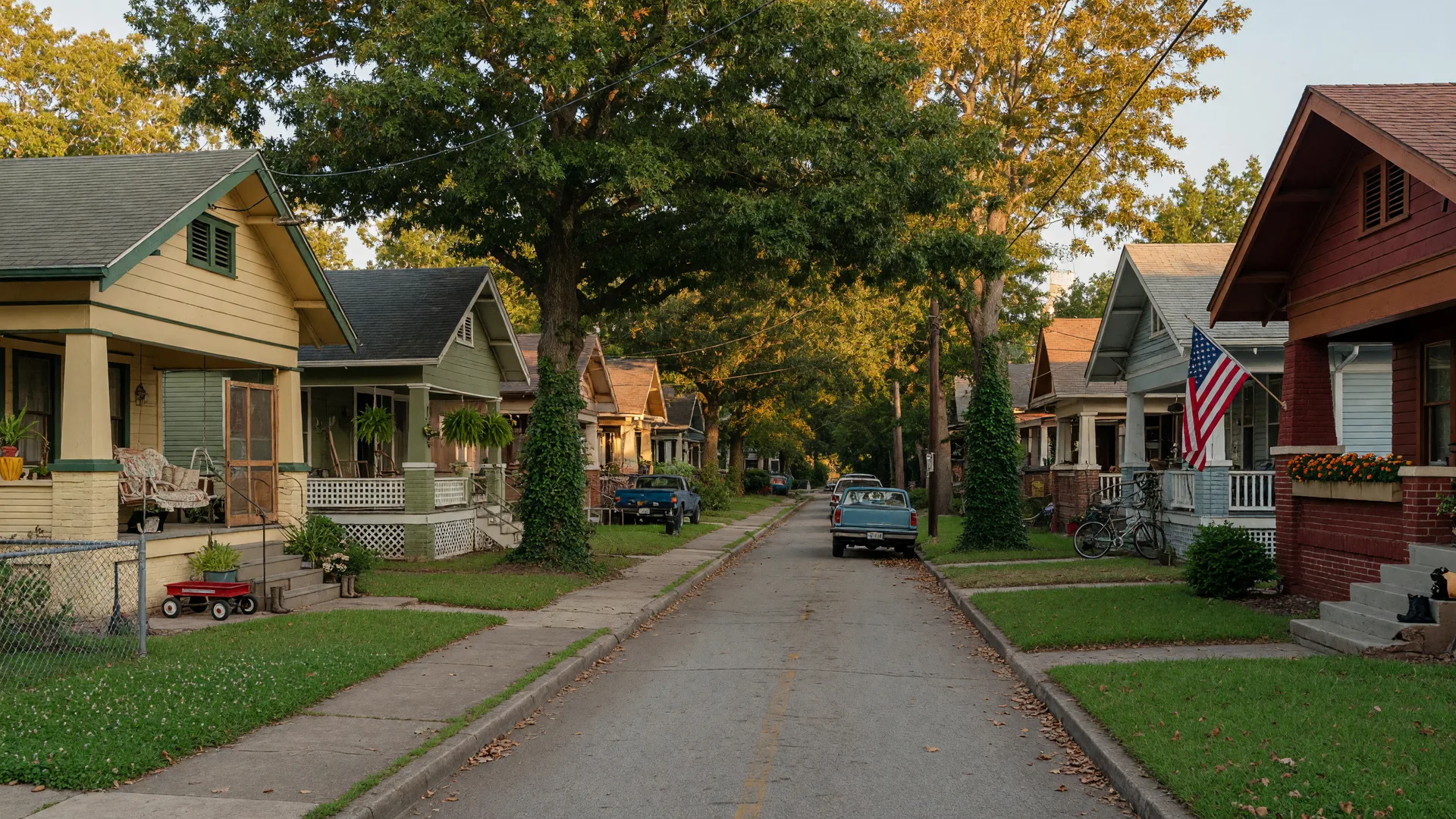

Tucked between the Houston Heights and Woodland Heights lies one of Houston's most charming and historically significant neighborhoods: Norhill. With its conserved Craftsman bungalows, mature tree canopy, and designation as one of the city's first protected historic districts, Norhill offers a rare combination of architectural integrity, community character, and prime Inner Loop location. If you're considering buying or selling here, this guide covers everything you need to know about Norhill real estate and lifestyle in 2026.
Where Is Norhill and Why Does It Stand Out?
Norhill is located just north of downtown Houston, directly adjacent to the Houston Heights and Woodland Heights. The broader neighborhood is bounded roughly by Studewood Street to the west, Pecore Street to the south, Moss Street to the east, and Fugate Street to the north. Its location places it minutes from the restaurants and shops along 19th Street, the hike-and-bike trails of White Oak Bayou, and the cultural attractions of the Heights — all while maintaining a quiet, residential feel that sets it apart from busier corridors.
What truly distinguishes Norhill is its status as a designated City of Houston Historic District, one of the first in the city, established in 2000. This designation protects the architectural character of the neighborhood and ensures that future development respects the original scale, style, and fabric of the community. For buyers who value historic charm and long-term neighborhood stability, Norhill is a standout choice in the Inner Loop market.
A Neighborhood Built by a Texas Icon
Norhill's story begins in the 1920s, when prominent Houston philanthropist Will C. Hogg — son of Texas Governor James S. Hogg — envisioned a master-planned community for working-class families. Developed in three phases (Norhill in 1920, North Norhill in 1923, and East Norhill in 1924), the neighborhood was built with complete infrastructure from the start: paved streets, concrete curbs, sidewalks, and water and sewer lines — a rarity for its time. The name "Norhill" combines "north" (north of downtown) and "hill" (its elevation, about 23 feet above downtown, offering natural drainage advantages).
The neighborhood was originally accessible via the Studewood streetcar line, and lots sold for $650 to $1,000 with favorable financing terms. Today, those same lots hold homes that routinely command prices above $700,000 — a testament to the enduring value of well-planned communities with strong preservation standards.
Norhill Real Estate: Market Trends in 2026
Norhill's real estate market reflects its historic status and desirable location. The Norhill Historic District has seen steady appreciation, with the median sale price reaching approximately $727,000 in early 2026 — a 4.9 percent increase year-over-year. Property values vary by home size, condition, and location within the district, with average list prices in the broader Norhill area reaching around $1.3 million for larger or fully renovated homes.
The average price per square foot in Norhill hovers around $493, positioning it among the higher-value Inner Loop neighborhoods — comparable to prime sections of the Heights but often offering more square footage for the price. Inventory is typically limited, as many homeowners stay for years or even decades, and turnover tends to be driven by life changes rather than market churn.
For buyers, this means you need to be prepared to act when a listing comes to market. Working with an experienced local agent who understands the Norhill market — including the nuances of historic designation and deed restrictions — is essential to navigating a competitive purchasing process. For sellers, limited inventory and strong buyer demand create a favorable environment, especially for homes that have been well-maintained or thoughtfully updated.
Housing Stock: Craftsman Character, Thoughtful Updates
Norhill's housing stock is remarkably cohesive. The dominant architectural style is the one-story Craftsman bungalow — characterized by low-pitched roofs, wide front porches, exposed rafters, and natural materials. Many of these homes were built from kit-house plans and pattern books, giving the neighborhood a unified yet varied streetscape. You'll also find two-story four-square houses, Colonial Revival examples, and a handful of later Ranch-style infill.
Because the neighborhood was planned for working-class families, very few homes were designed by architects. The result is a humble, approachable architectural character that feels authentic and rooted — not pretentious or showy. Many homes have been updated with modern kitchens, bathrooms, and systems while preserving original details like hardwood floors, built-in cabinetry, and Craftsman trim.
Buyers considering renovation should be aware that the historic district designation comes with preservation guidelines that govern exterior changes. This is not a barrier — in fact, it's one of the neighborhood's greatest protections — but it does mean working with contractors and architects who understand historic standards. Our team has helped numerous buyers and sellers navigate these guidelines successfully.
Everyday Life in Norhill
Life in Norhill is defined by its walkability, community feel, and proximity to everything the Heights and Inner Loop have to offer. The neighborhood's tree-lined streets and esplanades along Norhill Boulevard invite evening strolls and bike rides. Proctor Plaza park provides a small green space for residents, and the nearby White Oak Bayou trail network offers miles of paved paths for running, cycling, and walking.
The commercial corridor along 11th Street and Studewood puts Norhill residents steps away from some of Houston's best local businesses — coffee shops, restaurants, boutiques, and services. The popular Heights Mercantile and 19th Street shopping districts are just a short walk or bike ride away, as are the dining and nightlife options along Washington Avenue and White Oak Boulevard.
Families in Norhill are served by Houston ISD schools, including highly regarded options like Harvard Elementary and Hogg Middle School, as well as nearby magnet and private school choices. The neighborhood's central location also provides easy access to the major employment centers of Downtown, the Texas Medical Center, and the Energy Corridor.
Is Norhill Right for You?
Norhill is ideal for buyers who value historic character, walkable streets, and a strong sense of community. It attracts a diverse mix of residents: young professionals who want to be close to the action, families who appreciate the neighborhood feel and school access, and longtime homeowners who have preserved and cared for their bungalows over decades.
If you're comparing Norhill to nearby neighborhoods like Woodland Heights, the greater Houston Heights, or Shady Acres and Sunset Heights, the main difference is the historic protection Norhill carries. A home here comes with the confidence that your block will retain its character for generations to come — something you simply cannot get in non-historic areas.
"With us, you're not a number but a neighbor."
— Shawn Manderscheid
As a fourth-generation Houston Heights native, I've watched Norhill evolve while staying true to its roots. It's one of the most rewarding neighborhoods in Houston for buyers who appreciate history and sellers who have cared for their homes. If you're thinking about making a move in or to Norhill, we'd love to help.