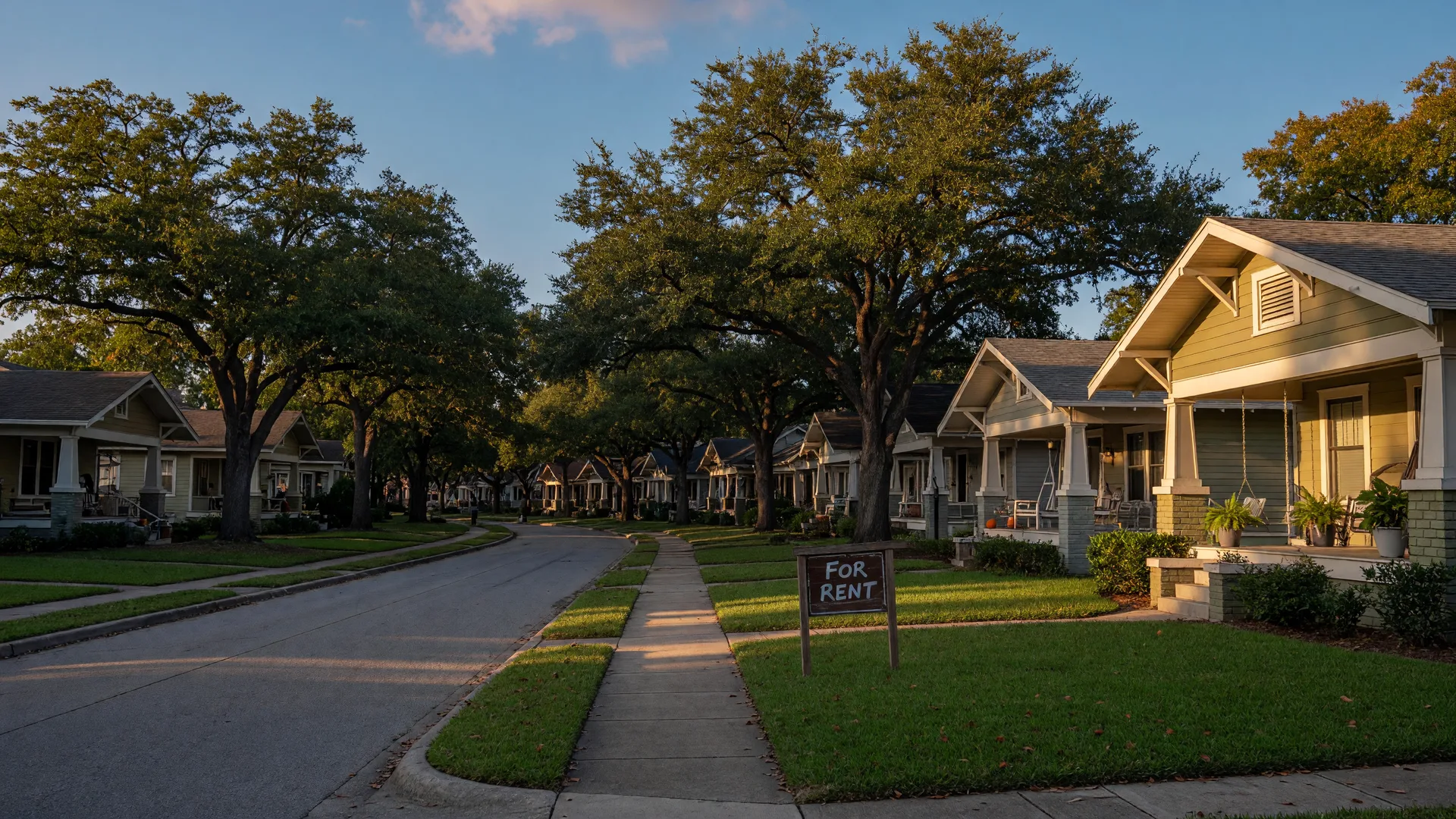

Is Houston Heights a good investment? For many buyers, the answer is yes, but the smart money depends on which property you choose, how you run the numbers, and what you are willing to manage. In 2026 the Inner Loop is one of the few parts of Houston where both home values and rental demand have stayed strong, which makes it a compelling place to own a rental property.
As a team with four generations of family roots in the Heights and more than 25 years of experience across these neighborhoods, we have helped buyers purchase rental properties, duplexes, and single-family investment homes from Houston Heights to Garden Oaks, Timbergrove, Montrose, and beyond. Here is what the current data says about investing in the Inner Loop, and what first-time and seasoned investors should weigh before they buy.
The Investment Case for the Inner Loop
Houston's rental market is essentially flat at the metro level in 2026, with the median single-family rent hovering around $1,900 a month and little year-over-year movement. That is not where the opportunity lives. Inside the 610 Loop, premium neighborhoods behave differently. Listing data from the Houston Association of REALTORS and local rental market reports show homes and townhomes for rent in the Greater Heights area averaging well above the metro median, with many single-family homes listing in the $2,600 to $3,200 range and townhomes averaging higher still.
Rental Snapshot, Houston Heights & Inner Loop, 2026
$1,900
Metro-wide median single-family rent
$2,600–$3,200
Typical 3-bedroom single-family rent, Heights/Montrose
$3,700+
Average townhome rent, Greater Heights
~$700K
Median sale price, Greater Heights
Rent figures from HAR and local rental market reports, 2026. Values are indicative ranges and vary by source and property type.
Why does the Inner Loop command these premiums? The fundamentals have not changed for decades: historic character, strong schools, walkable streets, and a tight, desirable housing stock. Because new construction completions in 2026 are projected at their slowest pace in over a decade, the existing supply stays constrained, which supports both appreciation and rental demand. For landlords, that translates into fewer vacancies and more consistent renters than in outlying areas.
Cash Flow, Appreciation, and the Tradeoffs
The tradeoff of buying an investment property in the Inner Loop is the entry price. At a median near $700,000 in the Greater Heights area, a single-family home there may not cash-flow on day one if you rely on the rent alone. That is a normal reality in the urban core. Many investors here buy for a combination of appreciation, favorable long-term financing, and strong tenant quality, then plan to hold for several years. In neighborhoods like Timbergrove, Lazybrook, Spring Branch, and parts of Oak Forest, entry prices are lower, which can make the monthly numbers work more comfortably from the start.
Be realistic about the full cost picture. Beyond the mortgage, you should budget for property taxes, insurance, maintenance, property management (if you do not self-manage), and the occasional vacancy. A detailed pro forma based on your actual purchase price and local comps beats a rule-of-thumb every time. We routinely run these numbers with clients so they know their true monthly carry before they commit.
Which Neighborhoods Fit an Investor Best?
Houston Heights offers the strongest appreciation and rental demand, especially near 19th Street, the hike-and-bike trail, and the new Swift BLDG development, but it demands the highest entry price.
Timbergrove and Lazybrook offer some of the best value inside the Loop, with larger lots, parks and trail access, and more approachable purchase prices, making them a popular entry point for Inner Loop investors.
Garden Oaks and Oak Forest combine steady appreciation with strong family rental demand. New townhome construction along corridors like 34th Street and Shepherd adds rental product and widens the pool of potential tenants.
Montrose and Cottage Grove appeal to renters who want walkable, urban living, which keeps occupancy high for well-located units even in a cooler market.
For a closer look at how these areas compare on price, visit our Neighborhood Price Guide or explore the Neighborhoods page.
New Construction and Special Property Types
New construction townhomes and courtyard homes are a popular vehicle for investors who want a turnkey rental with fewer maintenance surprises in the first few years. Meanwhile, a garage apartment or accessory dwelling unit can turn an owner-occupied Heights bungalow into a property that produces rental income while you live there, a strategy that is especially attractive given how valuable additional square footage has become in this market. Both routes have their own financing and, in some cases, historic district considerations, so it pays to understand the rules before you commit.
"With us, you're not a number but a neighbor."
Shawn Manderscheid
Whether you are buying your first rental, adding to a portfolio, or simply weighing whether an Inner Loop property makes sense for your goals, the Shawn Manderscheid Team can help you look at the real numbers, the right neighborhoods, and the properties that fit your strategy. With deep local roots and 28-plus years of experience, we know these blocks block by block. Reach out anytime to start the conversation.