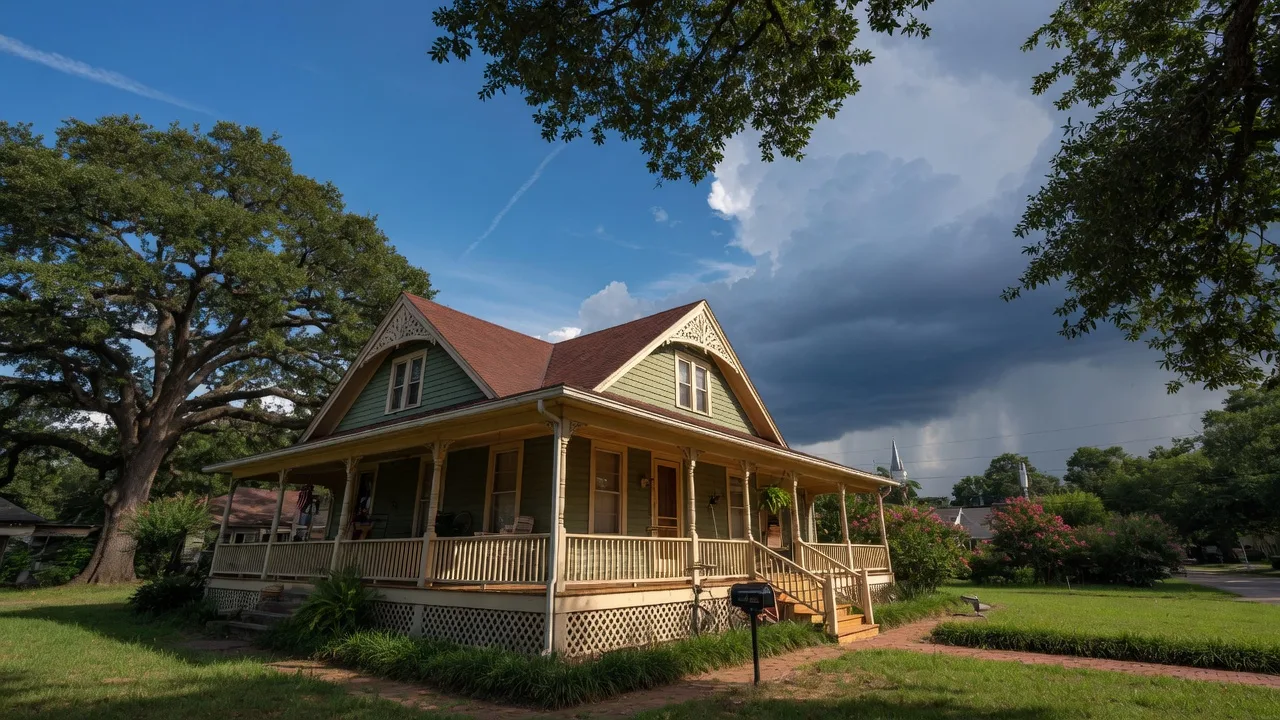

We are in the heart of hurricane season here in Houston, and if you are buying or selling a home in the Heights, Garden Oaks, Oak Forest, or any of our Inner Loop neighborhoods, understanding homeowners insurance is more important than ever. It is one of the most frequently overlooked aspects of a real estate transaction — and one that can carry significant financial consequences if you do not plan ahead.
Over 28 years of helping families buy and sell homes in these neighborhoods, we have seen too many buyers discover after going under contract that insurance costs will stretch their monthly budget far more than they expected. And we have seen sellers lose a deal because the buyer could not secure coverage at a reasonable rate. A little knowledge upfront can prevent both scenarios.
What Homeowners Insurance Costs in Houston Right Now
Let us start with the headline: Texas has the highest homeowners insurance premiums in the country, and Houston sits at the higher end of the Texas market. In 2026, a typical Houston homeowners policy for a home in the Heights or the Inner Loop ranges from $3,500 to $6,000 per year, depending on your home's value, age, construction type, and exact location. The Texas average is roughly $3,900 annually — nearly double the national average of around $2,490.
Premiums rose sharply in 2023 and 2024 — surging over 20% each year — before stabilizing somewhat in 2025. But rates remain elevated, and buyers need to factor them into their monthly housing budget just as seriously as property taxes or mortgage payments.
Windstorm Coverage and What It Means for Inner Loop Homeowners
One of the most important things to understand is that standard homeowners insurance in Texas covers wind damage from hurricanes — but the deductible structure can surprise you. Most carriers in Texas now use a separate 2% wind and hail deductible on top of your standard all-perils deductible. On a home insured for $600,000, that means you pay the first $12,000 of any wind or hail claim before your coverage kicks in.
For most Inner Loop neighborhoods, your standard homeowners policy will include wind coverage. However, homes in areas that are harder to insure may need to turn to the Texas Windstorm Insurance Association (TWIA) — the state's insurer of last resort for wind and hail. TWIA is generally limited to properties in the designated catastrophe area, which includes parts of Harris County east of Highway 146. Most homes in the Heights, Garden Oaks, Oak Forest, and Timbergrove fall outside that zone and can typically obtain wind coverage through standard carriers.
That said, any buyer considering a home in the eastern parts of our service area — or any property with a history of claims — should check with their insurance agent early in the buying process. We always advise our clients to have an insurance quote in hand before making an offer. It is a simple step that can prevent unwelcome surprises.
Flood Insurance: A Separate Conversation
It bears repeating every hurricane season: standard homeowners insurance does not cover flood damage. Flood coverage is a completely separate policy, typically through the National Flood Insurance Program (NFIP) or a private flood insurer. If your home is in a FEMA-designated high-risk flood zone, your mortgage lender will require it. But even homes outside high-risk zones can flood — and many of our clients choose to carry flood insurance regardless, especially after the storms Houston has experienced in recent years.
If you want a deeper dive on this topic, we covered flood zones and flood insurance extensively in our earlier guide. The short version: check the FEMA flood map for any property you are considering, and seriously consider flood insurance even if it is not required by your lender.
How Home Age and Condition Affect Insurance Costs
The age and condition of a home matter enormously to insurers. Historic bungalows in the Heights — with their original wiring, older plumbing, and dated roofing — often carry higher premiums than newer construction. Many insurers require a four-point inspection (roof, electrical, plumbing, HVAC) for homes over 25 years old before they will issue a policy. If any of those systems show their age, you may face higher rates or even a denial of coverage.
For sellers, this is worth knowing before you list. A pre-listing four-point inspection can flag issues that might stall a sale, giving you time to address them. For buyers, making your offer contingent on a satisfactory insurance quote — not just a general inspection — can save you from a painful surprise at the finish line. Our selling guide covers this kind of preparation in more detail.
Tips for Buyers Shopping for Insurance in the Inner Loop
Here are a few practical steps we share with every buyer we work with:
- Get quotes early. Talk to an insurance agent before you start making offers. Know what a given home will cost to insure before you commit.
- Shop around. Premiums vary significantly between carriers. An independent agent who represents multiple companies can often find better rates than going direct.
- Ask about bundling. Combining homeowners and auto insurance with the same carrier can save 10–25% on both policies.
- Check your deductible. A 2% wind/hail deductible on a $700,000 home means a $14,000 out-of-pocket cost. Make sure you are comfortable with that number before a storm hits.
- Consider flood insurance. Even in low-risk areas. The average flood claim in Houston far exceeds the average annual premium.
A Note for Sellers
If you are thinking about selling your home this season, there are steps you can take now to avoid insurance-related hiccups later. A newer roof, updated electrical panel, and modern HVAC system all make your home easier — and cheaper — to insure. If your roof is approaching the end of its useful life, replacing it before listing can remove a major obstacle for buyers and their lenders. The same goes for any known issues with your foundation or plumbing.
These improvements are not just about insurance. They also improve your home's marketability and can support a higher asking price. Our buyer's guide and seller's guide go into more depth on preparing your home for the market.
The Bottom Line
Insurance may not be the most exciting part of buying or selling a home, but it is one of the most important. In a market like Houston — where hurricane season runs from June through November, where premiums are the highest in the nation, and where a single storm can reshape a neighborhood's landscape — understanding what you are buying and what it will cost to protect it is essential.
Whether you are shopping for a historic bungalow in the Heights, a ranch home in Oak Forest, a new townhome in Cottage Grove, or a mid-century gem in Timbergrove, we can help you navigate the full picture — including the insurance side of the equation. With 28+ years of experience and four generations of family roots in these neighborhoods, we know the details that matter.
"With us, you're not a number but a neighbor."
— Shawn Manderscheid
Have questions about insurance, the market, or what your home might be worth in today's conditions? We would love to hear from you. Reach out anytime for an honest, no-pressure conversation about your real estate goals.