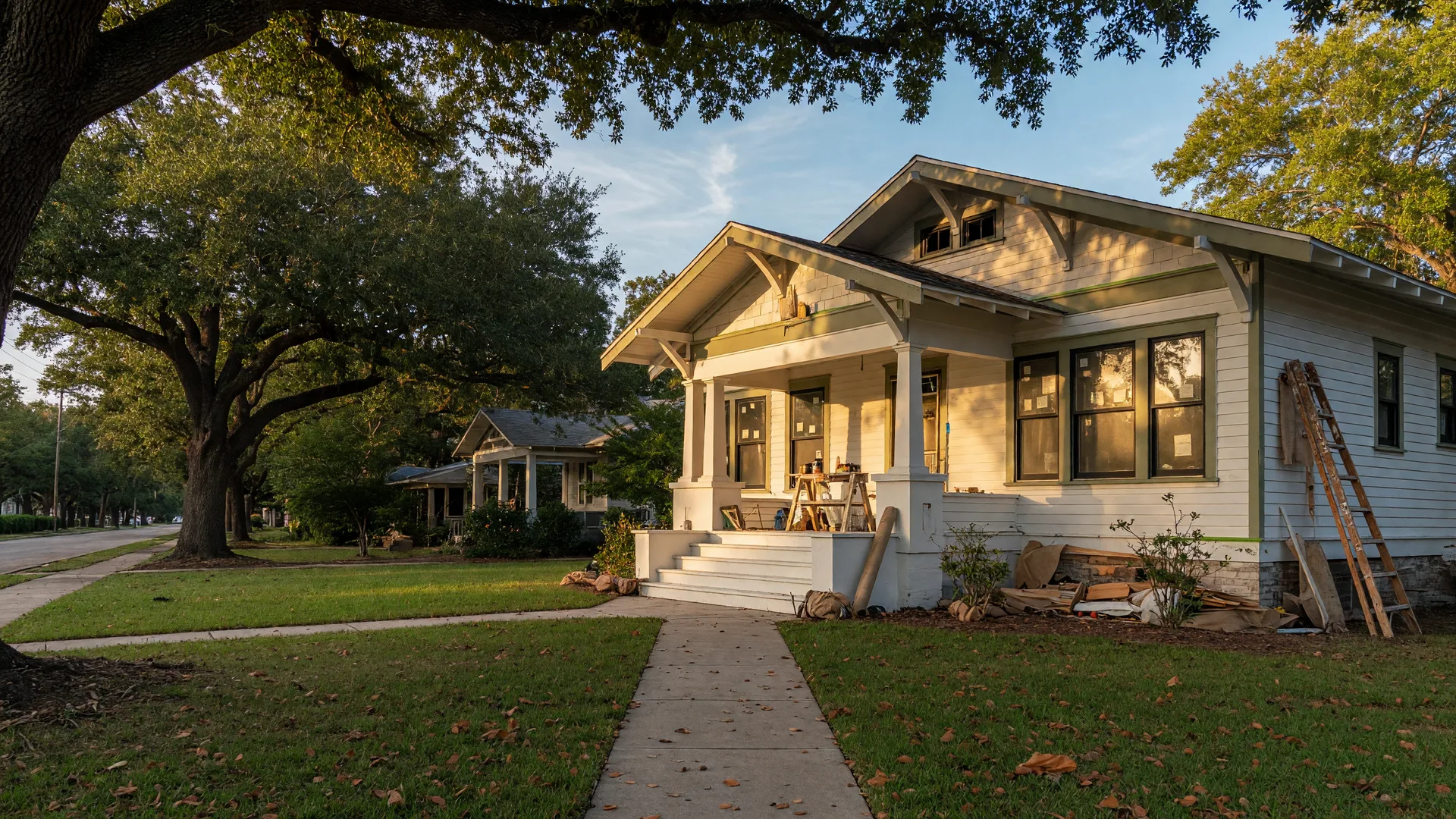

The short answer is yes, with the right plan: a fixer-upper in Houston Heights, Garden Oaks, or Oak Forest can be one of the smartest ways into the Inner Loop market in 2026. Unrenovated originals in these neighborhoods often list well below the median sale price, and renovation mortgages like the FHA 203(k) and Fannie Mae HomeStyle let you finance the purchase and the work in one loan. The catch: the strategy only works when you budget honestly and understand the local rules, especially inside the Heights' historic districts.
We are the Shawn Manderscheid Team, and our family roots in the Heights run four generations deep, from Nicholson Street to Harvard Street and beyond. We have watched buyers win with fixer-uppers and a few get in over their heads. Here is the strategy we use.
Where the Fixer-Uppers Are and What the Price Gap Looks Like
In Garden Oaks and Oak Forest, the classic fixer-upper is a mid-century ranch built in the late 1940s and 1950s on a large, oak-shaded lot. The 2026 market data shows a clear tier: entry-level original homes that need work have sold in the roughly $350,000 to $500,000 range, renovated mid-century homes in the $600,000 to $800,000 range, and new custom builds at $1 million and up. That spread is the opportunity: buy the original, renovate with discipline, and you can compete with the renovated tier for far less than the finished price.
In Houston Heights proper, the fixer-upper is more often a historic bungalow or Folk Victorian needing foundation work, a kitchen, or updated systems. These homes come with character and a historic district, which changes the renovation playbook, as our guide to buying a historic Heights home explains. Our neighborhood price guide shows what your budget buys across the Inner Loop.
Finance the Purchase and the Renovation in One Mortgage
Most buyers do not pay cash for a renovation, and they do not have to. The FHA 203(k) loan wraps the purchase price plus repair costs into one mortgage: the Limited 203(k) covers up to $75,000 of non-structural work such as kitchens, baths, flooring, and roofing, while the Standard 203(k) handles major structural projects with a $5,000 minimum. FHA allows credit scores as low as 580 with 3.5% down.
The Fannie Mae HomeStyle Renovation loan is the conventional alternative. It has no minimum project size, allows renovation costs up to 75% of the home's as-completed value, and permits down payments as low as 3% for eligible primary-residence buyers, typically with a credit score around 620. Renovation funds are held in escrow and paid out as work is completed.
Rates matter too: the 30-year fixed has hovered around 7.4% in early October 2026. The loan type, after-renovation value, and monthly payment are what count. Our pre-approval guide covers the documents and timeline lenders expect.
In the Heights, Historic District Rules Shape the Plan
Any home inside the Houston Heights historic districts needs a Certificate of Appropriateness from the City of Houston before exterior changes begin. Minor work, such as replacing siding in kind or updating a porch, can often be approved administratively in about 15 business days, while larger projects go to the Houston Archaeological and Historical Commission at its monthly meeting. Ordinary maintenance, in-kind re-roofing, landscaping, and HVAC work are generally exempt. Interior renovations do not need a Certificate of Appropriateness, so plan interior scope first and exterior changes around the approval calendar. Our guide to buying a historic home covers the full process.
Budget for What You Cannot See
An honest renovation budget starts with a thorough inspection. Foundation movement, roof age, and outdated electrical are the big-ticket items in older Inner Loop homes, and our home inspection guide explains what inspectors find in historic bungalows, mid-century ranches, and new builds. Add a 10% to 20% contingency reserve to the renovation budget for permits, surprises behind walls, and consultant fees. And renovate to the neighborhood's ceiling, not beyond it: our guide to renovations that add the most value shows where the payback is strongest.
When a Fixer-Upper Is Not the Right Move
A fixer-upper is the wrong call if you need to move in immediately, cannot manage contractors and timelines, or need the cleanest offer in a multiple-offer situation. In those cases, new construction or a move-in-ready home is often the better value; our bidding war guide shows how to compete.
"With us, you're not a number but a neighbor."
Shawn Manderscheid, The Shawn Manderscheid Team
Buying a fixer-upper in the Inner Loop is a team sport, and we have been playing it for more than 25 years. Whether you want to tour original homes in Oak Forest, talk renovation financing, or get a second opinion on a property, we are happy to help. Reach out anytime, and let's find the home with the most potential for you.