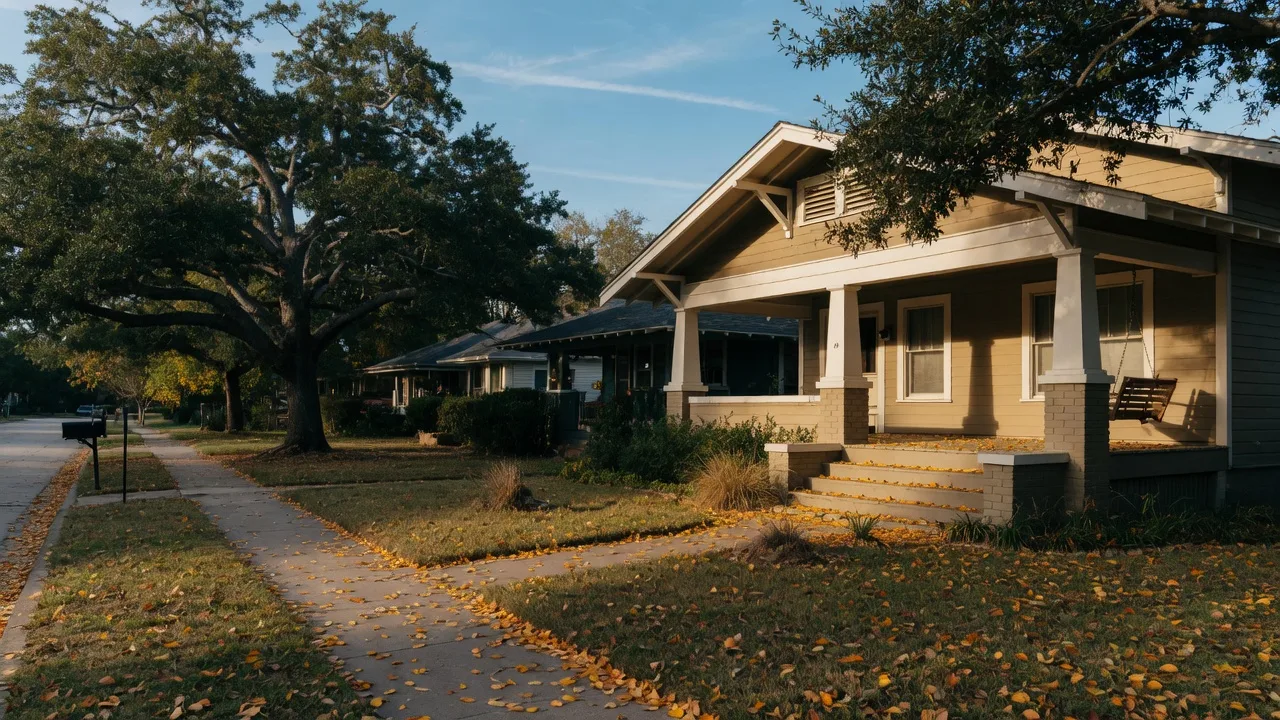

Most Houston Heights and Inner Loop sellers owe no federal capital gains tax on their home sale, thanks to an exclusion that shields up to $250,000 of gain for single filers and up to $500,000 for married couples filing jointly. Whether you keep your gain tax-free or owe tax depends on how long you have owned and lived in the home, and on the gap between what you paid and what you cleared. Here is how the 2026 rules apply to sellers across Houston Heights, Garden Oaks, Oak Forest, Timbergrove, Montrose, and Spring Branch, from the Shawn Manderscheid Team.
We hear this question most often in October, when sellers weigh a year-end closing against a spring listing. The good news: for most of our neighbors, no capital gains tax is owed at all. Understanding the rules before you sign a listing agreement can protect your profit.
The Exclusion Most Sellers Can Use
Under IRS Section 121, you can generally exclude gain on the sale of your principal residence: up to $250,000 if you are single, and up to $500,000 if you are married and file jointly. To qualify, you must have owned the home and used it as your primary residence for at least two of the five years before the sale. The two years do not need to be consecutive. In most cases the exclusion can be used only once every two years. The limits have applied since 1997, and the tax law enacted in July 2025 left Section 121 unchanged, so the same numbers govern 2026 sales. The IRS explains it all in Publication 523, Selling Your Home.
What That Means in Today's Heights Market
The math works out well in this neighborhood. As our Q3 2026 market recap notes, median sale prices in the Heights are running around $761,000 to $771,000 depending on the data source. A homeowner who bought years ago and sells near the median is almost always inside the exclusion caps, even after strong appreciation. The same math covers most recent moves: buyers who purchased during the 2021 to 2023 run and now need to relocate have usually met the 2-of-5-year test, with gain fully shielded.
Your Starting Point Matters: Cost Basis
Taxable gain is not simply sale price minus purchase price. Your adjusted cost basis starts with what you paid, then adds certain closing costs and the cost of capital improvements made while you owned the home, such as a kitchen remodel, a new roof, or a foundation repair. Selling costs, including the commission and title fees, reduce the amount you realize. That is why saving renovation receipts matters: in a neighborhood of historic bungalows and older ranch homes, documented improvements can meaningfully shrink the gain, and a shoebox of invoices can be worth real money at closing.
When Sellers Do Owe Tax
A taxable sale happens when your gain exceeds the exclusion for your filing status. The excess is generally taxed at long-term capital gains rates of 0, 15, or 20 percent in 2026, depending on your filing status and taxable income, for homes owned more than a year. Homes held less than a year are taxed at ordinary income rates. If your gain might exceed the caps, a CPA can model your exact filing situation. We are agents, not tax advisers, so talk to your tax professional before you list.
The Texas Advantage
Texas has no state income tax, so there is no state capital gains tax on your home sale. Combined with the federal exclusion, selling a principal residence here is one of the most tax-advantaged moves in the country, and one more reason buyers keep choosing Houston Heights, Garden Oaks, Oak Forest, and the surrounding Inner Loop neighborhoods as places to put down roots.
Does Closing in 2026 or 2027 Change Anything?
The exclusion amount does not change from one tax year to the next, but the year you close determines when the sale is reported and how your other income and deductions line up around it. Some sellers time a remodel so improvement costs land in the same tax year; others simply prefer closing before year-end. Our holiday selling guide covers why the year-end market works for sellers, and our home valuation guide shows where your home stands today. A quick conversation with a CPA before you list will settle any timing questions.
"With us, you're not a number but a neighbor."
Shawn Manderscheid, The Shawn Manderscheid Team
Shawn's family has called the Heights home for four generations, from Nicholson Street to Harvard Street and beyond, and the team has guided hundreds of Inner Loop families through sales. We know the market, the paperwork, and the neighborhoods block by block. Reach out anytime for a free home valuation, a sale strategy conversation, or help finding your next home.